
If you have ever wondered why so many bloggers are focusing on software reviews, business technology, and B2B content, one major reason is the growth of Software-as-a-Service (SaaS).
Understanding what SaaS is and how it works is only the beginning. The bigger opportunity for content creators comes from understanding why SaaS-related searches can attract readers who are actively researching software for their businesses.
SaaS companies often operate around recurring subscriptions, business software, and long-term customer relationships. As a result, SaaS blogs can target readers searching for software comparisons, reviews, pricing information, alternatives, and solutions to specific business problems.
This guide explains the SaaS business model, different SaaS pricing models, why SaaS content can attract valuable traffic, and how bloggers can build a content strategy around the U.S. market.
What Is SaaS and How Does It Work?
Software-as-a-Service, commonly known as SaaS, is a software delivery model in which customers access applications over the internet rather than purchasing and installing traditional software locally.
Instead of buying a software license once and managing the application themselves, customers typically pay a recurring subscription to access the service.
The SaaS provider generally manages:
- Hosting
- Software updates
- Infrastructure
- Maintenance
- Security processes
- Technical improvements
- Service availability
Examples of SaaS categories include CRM platforms, project management software, marketing tools, accounting platforms, communication applications, analytics software, and productivity tools.
Core Characteristics of SaaS
Several characteristics distinguish SaaS from traditional software models.
Subscription-Based Pricing: Customers commonly pay monthly or annually for access to the software.
Cloud-Based Access: Users can generally access the application through an internet connection rather than installing the complete system locally.
Centralized Updates: The provider manages software updates and improvements.
Scalable Plans: SaaS companies often offer different plans designed for individuals, small businesses, teams, and larger organizations.
This recurring relationship between software companies and customers is one reason SaaS has become an important category for technology-focused content.
Image Caption: Understanding the SaaS Business Model and How It Works

Best SaaS Business Models in 2026
Not every SaaS company uses the same pricing or delivery model. Understanding these models helps explain the variety of software products available to consumers and businesses.
Freemium SaaS
A freemium model provides a basic version of the software for free while charging for additional features or higher usage limits.
This approach can attract a large number of users before converting a percentage of them into paying customers.
Common examples include productivity, communication, design, and project-management applications.
Per-Seat Pricing
Under a per-seat model, the customer pays based on the number of users who need access.
This approach is common among:
- CRM platforms
- Team collaboration tools
- Project management software
- Business communication applications
As a company adds employees, its software costs can increase.
Usage-Based Pricing
Some SaaS companies charge customers according to how much of the service they consume.
Examples may include:
- API calls
- Data usage
- Storage
- Transactions
- Processing volume
This model can be particularly relevant for technical SaaS and infrastructure products.
Tiered Subscription Pricing
Tiered pricing gives customers different packages at different price points.
For example, a provider might offer plans designed for:
- Individuals
- Small teams
- Growing businesses
- Enterprise organizations
Each tier may include different features, usage limits, or support options.
Vertical SaaS
Vertical SaaS focuses on a specific industry rather than attempting to serve every type of business.
Examples can include software designed specifically for:
- Real estate
- Legal services
- Healthcare
- Construction
- Hospitality
- Financial services
The more specialized the software, the more specific the content opportunities can become.
Why SaaS Blogs Can Attract High-Value Traffic
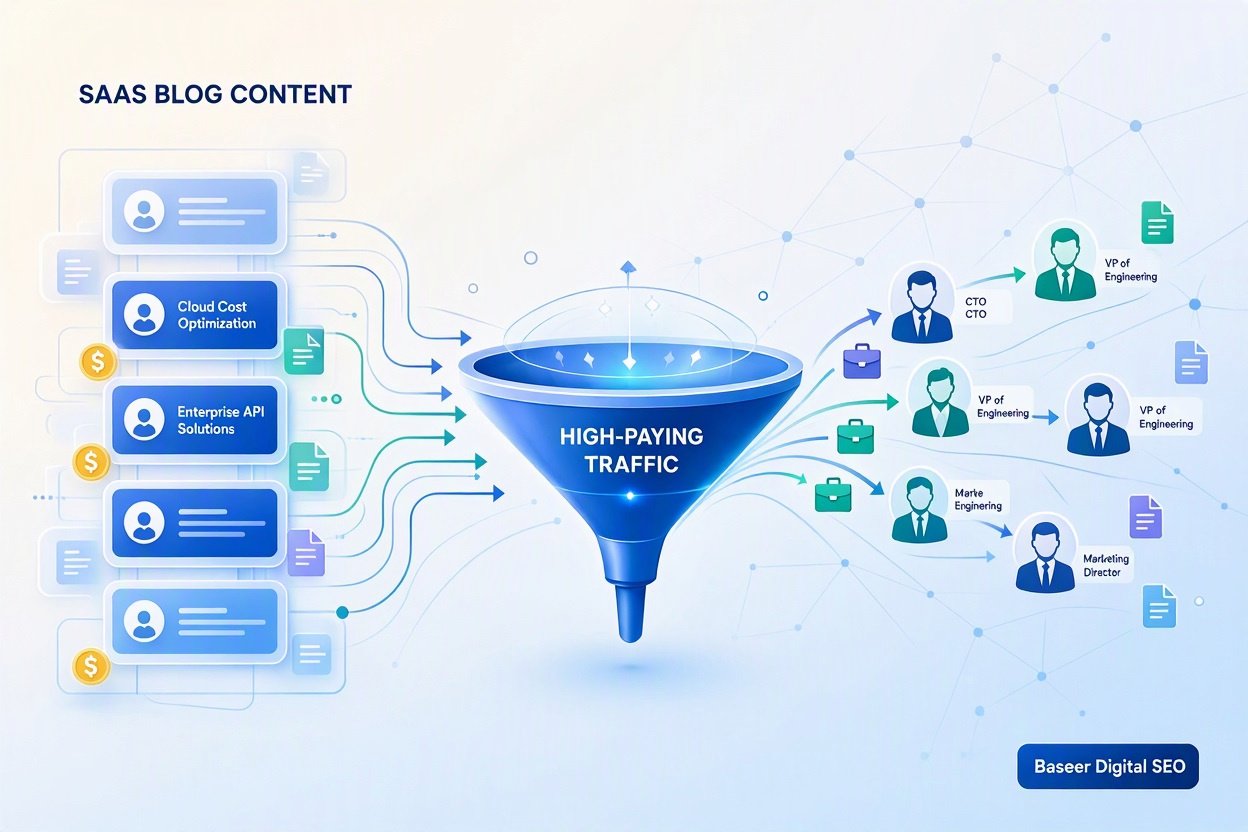
SaaS is particularly interesting to bloggers because many searches occur close to a purchasing decision.
Someone searching for:
- Best CRM software
- CRM alternatives
- Project management software pricing
- Best SEO tools
- Email marketing platforms
- SaaS software for small businesses
may already be evaluating potential products.
This is different from a purely informational search where the visitor has no commercial intent.
The Economics Behind SaaS Traffic
SaaS companies often operate subscription-based businesses, which means acquiring a customer can potentially create recurring revenue over time.
This can influence how companies approach:
- Advertising
- Content marketing
- Affiliate marketing
- Sponsorships
- Partnerships
- Search engine optimization
However, the value of traffic varies significantly between businesses, keywords, audiences, and products. Not every SaaS keyword or visitor will have the same commercial value.
B2B Search Intent
B2B software searches can involve substantial business budgets.
A company may spend considerable time comparing several platforms before selecting one.
This creates opportunities for content such as:
- Software comparisons
- Product reviews
- Alternatives
- Pricing guides
- Feature comparisons
- Implementation guides
- Industry-specific software recommendations
These content formats can attract readers who are further along in the buying journey.
Image Caption: Analyzing SaaS Traffic, Content Performance, and Affiliate Opportunities

SaaS Content Marketing Strategy for the U.S. Market
Building a SaaS blog for a U.S. audience requires more than publishing general software articles.
The content should match the way potential customers research and compare business software.
1. Create Software Comparison Content
Comparison articles can target readers who are actively evaluating multiple options.
Examples include:
- Tool A vs. Tool B
- Best alternatives to a specific platform
- Best CRM software for small businesses
- Best project management tools for remote teams
These articles can address specific decision-making questions rather than simply explaining what a product does.
2. Publish Detailed Software Reviews
A useful software review can cover:
- Features
- Pricing
- Ease of use
- Integrations
- Customer support
- Advantages
- Limitations
- Ideal users
- Alternatives
Avoid presenting every product as perfect.
Readers are more likely to find reviews useful when they clearly explain both strengths and limitations.
3. Target Specific Business Use Cases
Instead of creating only broad topics such as “Best SaaS Tools,” develop content around specific problems.
For example:
- Best CRM for small businesses
- Project management software for remote teams
- Marketing automation tools for e-commerce
- Accounting software for freelancers
- SEO software for agencies
Specific use cases can make content more relevant to a defined audience.
4. Publish Original Research and Case Studies
Original information can help differentiate a SaaS blog from websites that simply summarize product features.
Potential content assets include:
- Product testing
- Original comparisons
- Surveys
- Case studies
- Workflow experiments
- Cost comparisons
- Screenshots of real testing
- First-hand observations
The more original value an article provides, the more useful it can become to readers.
Optimizing SaaS Content for U.S. Search Intent
If your target audience is primarily in the United States, consider how American readers search for software.
Commercial modifiers often include terms such as:
- Best
- Pricing
- Alternatives
- Review
- Software
- Tools
- For small business
- For enterprise
- For startups
For example:
Best CRM Software for Small Businesses in the U.S.
has a different intent from:
What Is CRM Software?
Both topics can be useful, but they serve different stages of the customer journey.
Use U.S.-relevant examples and pricing information when appropriate, but always verify current prices and product details before publication.
High-Ticket SaaS Affiliate Programs
Affiliate marketing can be an important monetization strategy for SaaS blogs.
Instead of earning primarily from display advertising, a blogger can potentially earn commissions when readers purchase or sign up for software through a qualifying referral.
What Makes SaaS Affiliate Marketing Attractive?
Some SaaS affiliate programs offer:
- One-time commissions
- Recurring commissions
- Percentage-based commissions
- Fixed referral payments
- Tiered partner structures
The exact commission structure varies significantly between companies and can change over time.
Before promoting a program, check its current terms, eligibility requirements, payout conditions, cookie duration, and commission structure.
SaaS Categories With Affiliate Potential
Several software categories can provide content opportunities, including:
CRM and Sales Software
CRM platforms can have substantial business value because they are often used throughout an organization’s sales process.
Marketing Automation
Marketing platforms can include email marketing, lead generation, automation, analytics, and campaign management.
Website Builders and Hosting
Website-related searches can attract both individuals and businesses looking to create or improve their online presence.
Project Management and Productivity Software
These tools appeal to freelancers, small businesses, agencies, and larger organizations.
How to Build a SaaS Blog That Attracts Valuable Traffic
A successful SaaS content strategy requires consistency and focus.
Choose a Specific SaaS Sub-Niche
Instead of covering every type of software, consider starting with one area.
Potential sub-niches include:
- SEO software
- CRM tools
- Marketing platforms
- E-commerce software
- Productivity tools
- AI software
- Project management
- Business finance software
A focused topic makes it easier to build topical authority.
Create a Content Cluster
Build multiple connected articles around your core topic.
For example, an SEO SaaS blog might publish:
Pillar: Best SEO Software
Supporting articles:
- Best SEO Tools for Small Businesses
- SEO Software for Agencies
- Ahrefs Alternatives
- Semrush vs. Ahrefs
- Best Free SEO Tools
- SEO Software Pricing Guide
- How to Choose SEO Software
This creates a broader content ecosystem rather than relying on one article.
Mix Informational and Commercial Content
A SaaS blog should not publish only product reviews.
Use a combination of:
Informational Content
- What is CRM software?
- How does marketing automation work?
- What is project management software?
Commercial Content
- Best CRM software
- Best marketing automation platforms
- Top project management tools
Transactional/Comparison Content
- Tool A vs. Tool B
- Best alternatives
- Pricing comparisons
- Product-specific reviews
This allows the website to address different stages of the buyer journey.
How to Monetize a SaaS Blog
There are several potential monetization methods.
Affiliate Marketing
Recommend relevant software and earn a commission when eligible readers convert through your referral.
Display Advertising
Advertising can generate revenue from page views, although earnings vary by audience, geography, traffic quality, and ad network.
Sponsored Content
SaaS companies may pay publishers for sponsored articles, reviews, or other promotional placements.
Sponsored content should be clearly disclosed and should follow applicable advertising and platform guidelines.
Direct Partnerships
Once a website develops a relevant audience, software companies may become interested in direct partnerships.
These could include:
- Sponsored newsletters
- Product collaborations
- Software partnerships
- Expert interviews
- Research projects
How to Position Your SaaS Blog for U.S. Traffic
A U.S.-focused SaaS blog can improve relevance by building content around the needs of American businesses.
Consider:
- U.S. pricing where relevant
- U.S. business examples
- American spelling where appropriate
- U.S.-focused software comparisons
- Small-business use cases
- Startup use cases
- Enterprise software requirements
However, avoid assuming that every American business has identical needs.
A freelancer, startup, local business, and enterprise company may all search for completely different software solutions.
Common Mistakes SaaS Bloggers Should Avoid
Covering Too Many Software Categories
Trying to rank for every SaaS topic can make the site unfocused.
Publishing Thin Reviews
Simply repeating a product’s feature list does not provide much original value.
Ignoring Product Limitations
A useful review should discuss both advantages and limitations.
Using Outdated Pricing
SaaS pricing changes frequently.
Always verify pricing before publishing or updating an article.
Focusing Only on Traffic
Large traffic numbers do not necessarily mean high revenue.
A smaller audience searching for highly relevant business software can be more commercially valuable than a much larger audience with low purchase intent.
Relying Entirely on Affiliate Links
Affiliate marketing can be useful, but building a sustainable website should involve creating genuinely valuable content rather than turning every paragraph into a sales pitch.
SaaS Blog SEO Checklist
Before publishing a SaaS article, check:
- Search intent is clearly identified
- Primary keyword is used naturally
- Article provides original value
- Product information is accurate
- Pricing is current
- Pros and limitations are included
- Relevant internal links are added
- Images have descriptive alt text
- Metadata is optimized
- Affiliate disclosures are provided where required
- Content is easy to scan
- U.S. examples are relevant when targeting U.S. readers
- Affiliate links are relevant to the content
- Article is updated when important product information changes
Final Thoughts
Understanding what SaaS is and how it works provides the foundation for building a technology-focused content strategy.
The larger opportunity comes from understanding the search behavior surrounding SaaS products. Businesses and professionals regularly research software through reviews, comparisons, pricing pages, alternatives, and use-case guides.
That creates opportunities for bloggers who can provide genuinely useful information.
A successful SaaS blog should not focus simply on publishing hundreds of software articles. Instead, focus on a specific sub-niche, build topical authority, create detailed comparison and review content, target different stages of the buyer journey, and provide information that helps readers make better software decisions.
Affiliate marketing, advertising, sponsorships, and direct partnerships can all become potential monetization channels as the site develops an audience.
The strongest foundation is still the same: useful content, accurate information, clear search intent, and a focused SaaS content strategy.
SEO Keywords
Primary Keywords:
- What is SaaS
- What is SaaS and how it works
- Why SaaS blogs attract high-paying traffic
- Software-as-a-Service blogs
- SaaS content marketing
Supporting Keywords:
- SaaS business models 2026
- SaaS content marketing strategy USA
- High-ticket SaaS affiliate programs
- SaaS affiliate marketing
- SaaS blog SEO
- Best SaaS software
- B2B SaaS content strategy
- SaaS software reviews
- SaaS comparison articles
- SaaS affiliate opportunities





Leave a Reply