
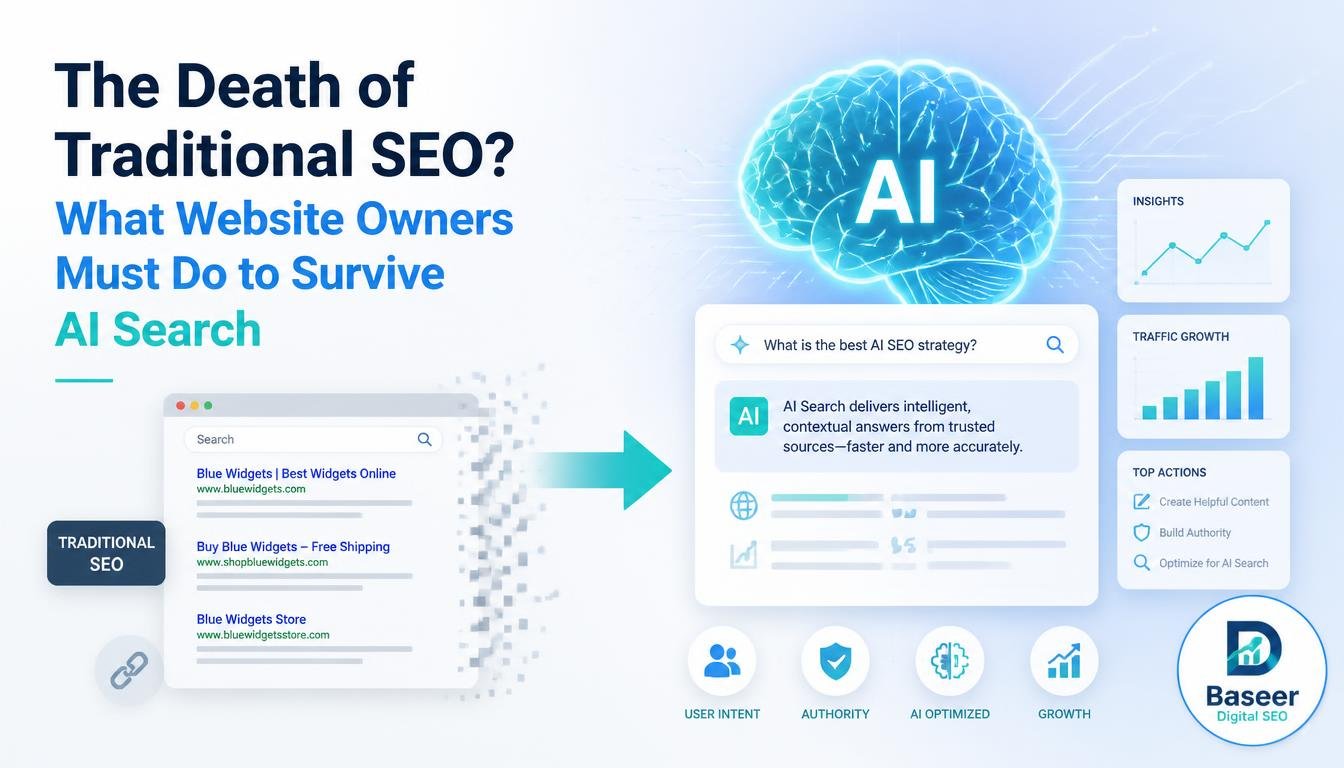
For years, website owners have heard that SEO is dying. First, social media changed how people discovered content. Then, voice search and featured snippets changed how users found answers. Now, AI-powered search is creating another major shift, and businesses can no longer afford to ignore it.
People are increasingly using AI assistants and search engines that generate answers instead of simply displaying a list of links. For businesses, publishers, and digital marketing agencies in the United States, United Kingdom, and Canada, this raises an important question: if users can get answers without visiting a website, how can a business remain visible online?
This is where AI search optimization comes into the picture. Website owners need to understand how search is evolving, what still works, and how to make their content useful to both traditional search engines and AI-powered platforms.
The good news is that traditional SEO has not suddenly become irrelevant. Technical performance, relevant content, credible information, and a strong user experience still matter. What is changing is the way people discover information and how businesses measure online visibility.
What Is Changing in Search and Why Traditional SEO Is Evolving
For a long time, the search process was straightforward. Someone entered a query into Google or Bing, reviewed the results, and clicked the page that seemed most useful.
That process still exists, but it is no longer the only way people find information. Google now offers AI-generated features in eligible search results, Microsoft has integrated AI into its search experience, and conversational tools such as ChatGPT and Perplexity can help users research topics and compare options.
The exact features and availability vary by platform and location, but the overall shift is clear: users can increasingly explore a topic and receive a summarized answer without opening several websites.
This is an important part of how AI is changing SEO. Ranking highly remains valuable, but website owners also need to think about whether their content is clear, credible, and useful enough to be referenced in an AI-generated response.
For example, a small business in Toronto might publish a detailed guide explaining how to choose commercial insurance. A reader could discover that guide through a traditional search result or encounter information from it in an AI-assisted research session. These are different discovery paths, and both can contribute to brand awareness.
The practical lesson is simple: don’t abandon traditional SEO. Expand your strategy to account for the ways people now search, compare information, and make decisions.

How AI-Powered Search Is Changing the Way People Find Information
AI-powered search helps users explore questions through conversational answers, summaries, and follow-up interactions. Instead of requiring someone to open multiple pages and combine the information themselves, an AI tool may summarize material from several sources in one response.
Imagine a homeowner in Manchester searching for ways to reduce heating costs. They might ask an AI assistant to compare insulation options, explain the advantages of different heating systems, and identify questions to ask a qualified installer.
Rather than searching for each topic separately, the homeowner can continue asking questions within the same conversation.
This creates new opportunities for businesses that publish useful, accurate information. A company with a genuinely helpful guide may become part of the research process, even when the person does not immediately visit its website.
However, being mentioned by an AI platform does not automatically generate a click, lead, or sale. Website traffic from AI search depends on the platform, the user’s question, the response format, and whether the person wants to explore the original source.
AI-generated search results can also vary between queries and sessions. A business should therefore treat AI visibility as an additional opportunity to measure, not as a guaranteed source of traffic.
To respond effectively, website owners should focus on three priorities:
- Answer real customer questions with accurate, practical information.
- Build a recognizable brand associated with a specific subject or service.
- Give readers a clear reason to visit the website for further details, tools, original research, or professional assistance.
Traditional SEO vs. AI Search: What Is the Difference?
The discussion around traditional SEO vs AI search often makes the two approaches sound like competitors. In practice, they overlap considerably.
Traditional SEO focuses on helping search engines discover, understand, and rank web pages. AI search optimization builds on many of those foundations while considering how information may be selected, summarized, and referenced in AI-generated answers.
| Area | Traditional search | AI-powered search |
|---|---|---|
| Typical experience | A list of ranked pages | A generated response, sometimes with source links |
| User behavior | Browsing and clicking results | Asking questions and exploring follow-ups |
| Common measurements | Rankings, clicks, impressions, conversions | Citations, mentions, referral visits, conversions, and brand awareness |
| Useful content qualities | Relevance, depth, accuracy, usability | Relevance, clarity, credibility, and useful supporting details |
| Predictability | Established practices, although rankings change | More variable outputs and less transparent selection processes |
These differences do not mean that businesses need two completely separate websites or content strategies.
Strong technical SEO, useful content, relevant backlinks, logical internal linking, and a good user experience continue to support organic visibility. These traditional SEO strategies provide a foundation for adapting to newer search experiences.
Understanding Answer Engine Optimization (AEO) and Generative Engine Optimization (GEO)
Two terms frequently appear in discussions about AI search: answer engine optimization and generative engine optimization.
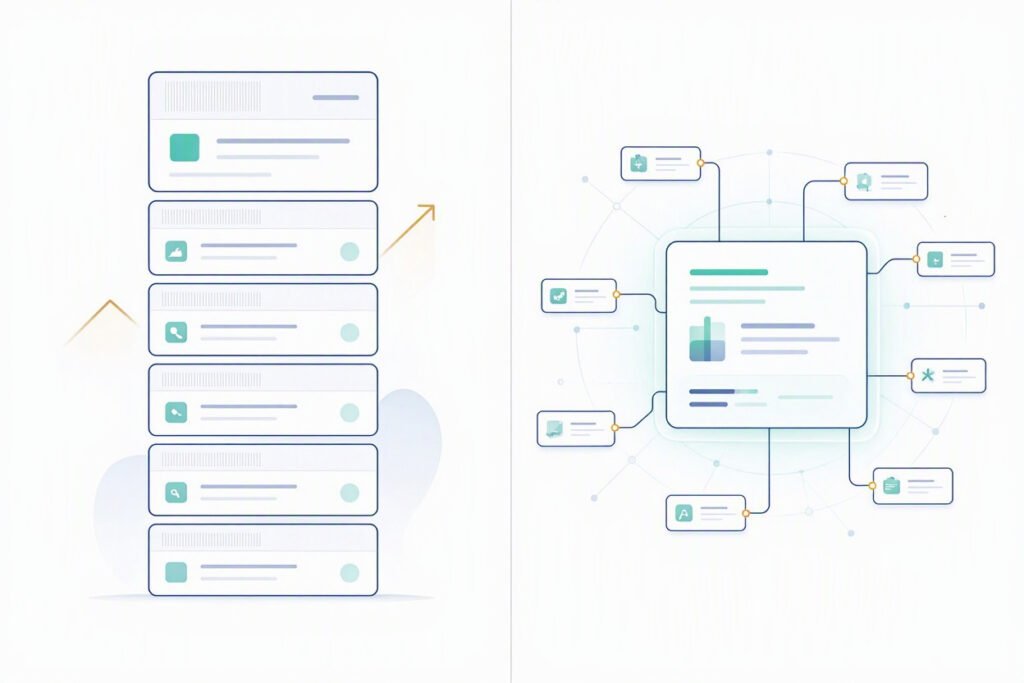
Answer engine optimization (AEO) focuses on making information easy to retrieve and present as a direct answer. This can involve writing clear explanations, organizing pages around real questions, and placing important information where readers can find it quickly.
Generative engine optimization (GEO) refers to efforts intended to improve the likelihood that content or a brand will be surfaced, mentioned, or cited in generative AI responses.
Both concepts are related to established SEO practices, although the terminology and methods are still evolving. There is no universal checklist that guarantees a page will appear in an AI answer.
For a Canadian financial advisory firm, for example, useful steps might include publishing clearly structured educational guides, identifying qualified authors, explaining complex terminology, and supporting factual claims with reputable sources. These improvements can help readers understand the content regardless of which platform they use.
The sensible approach is to treat AEO and GEO as extensions of a broader content and SEO strategy, rather than replacements for it.
Why Zero-Click Searches Are Becoming More Important
Zero-click searches occur when someone finds the information they need directly on a search results page without visiting an external website.
This behavior existed before generative AI. People can already find quick facts, business hours, weather information, and other basic details directly in search results. AI-generated summaries may extend this behavior to more complicated questions.
For website owners, the concern is straightforward: a page might help someone without receiving a visit.
A US publisher answering a simple definition query, for example, may face a different click opportunity from a specialist business publishing an in-depth comparison of enterprise software. The second topic may require more detailed research before a reader makes a decision.
Rather than trying to win every possible click, focus on the value your content provides and the business outcomes it supports.
Consider these three approaches:
- Build brand recognition: A useful mention or citation may introduce your business to someone who has not encountered it before.
- Target meaningful customer needs: Develop detailed resources for readers comparing services, evaluating products, or solving complicated problems.
- Give people a reason to visit: Offer original research, calculators, templates, detailed comparisons, demonstrations, or expert guidance that a short summary cannot fully replace.
Monitor your own search impressions, clicks, and conversions before deciding how significantly zero-click behavior is affecting your business.
How to Optimize Your Website for AI Search
If you are researching how to optimize for AI search, start with practical improvements rather than chasing shortcuts or supposed secret ranking factors.
Make Your Website Easy to Crawl and Understand
Search visibility still depends on whether important pages can be discovered and accessed. Review your site’s technical foundations, including:
- Crawlability and indexability of important pages.
- Mobile usability and page loading performance.
- Clear navigation and logical URL structures.
- Internal links that connect related content.
- Appropriate use of robots directives and XML sitemaps.
- Structured data that accurately reflects the content on the page.
Check your settings before blocking any crawler. Different AI and search providers have different policies and controls, so consult their current official documentation if you want to manage how their systems access your content.
Match Content to Search Intent
Search intent optimization means understanding what a person actually wants to achieve with a query.
Someone searching for “how to fix a leaking kitchen tap” needs practical troubleshooting information. Someone searching for “plumber near me” is more likely to need a local service provider.
The content should reflect that difference.
For a plumbing business in Chicago, a useful service page might explain which problems the company handles, what customers can expect during a visit, the areas it serves, and how to request assistance. A separate educational guide could explain common causes of leaks and when professional help is needed.
Answering the real question makes content more useful to visitors and gives search systems clearer information about the page’s purpose.
Make Your Business Information Consistent
Keep important business details accurate across your website and reputable business profiles. Use clear service descriptions, genuine contact information, relevant author biographies, and appropriate structured data.
These steps help users understand who you are and what you offer. They do not guarantee inclusion in AI answers, but they support a more trustworthy online presence.
Building Topical Authority and Brand Trust in the AI Era
Topical authority SEO involves building meaningful coverage of a subject rather than publishing unrelated articles simply to increase content volume.
If you want a step-by-step method, our guide on how to build keyword clusters shows how to organize related topics into connected content.
Imagine a UK company that sells project management software. Instead of publishing scattered posts about productivity, it could build a connected library covering project planning, team collaboration, workflow automation, resource allocation, and software comparisons.
A central guide can introduce the main subject, while supporting articles explore specific questions in greater depth. Internal links connect those resources and help visitors navigate the topic.
This approach creates a more useful experience and helps search engines understand how the pages relate to one another.
Brand authority in AI search also depends on credibility and recognition. While no single signal guarantees an AI mention, businesses can strengthen their reputation by:
- Publishing content under identifiable authors with relevant experience.
- Sharing original research, demonstrations, and practical examples.
- Earning legitimate editorial mentions and links from relevant publications.
- Keeping important information accurate and up to date.
- Building genuine customer reviews on appropriate platforms.
- Making their expertise and business identity easy to verify.
For a Canadian accounting firm, this could mean publishing carefully maintained guides to small-business bookkeeping and tax responsibilities, with qualified accountants reviewing the material.
The aim is not to make a brand appear everywhere. It is to build a reliable body of work that demonstrates genuine expertise.

Creating Content That AI Search Engines Can Understand and Reference
Effective content optimization for AI search starts with something simple: make information clear, useful, and easy to verify.
A page should not force readers to search through several paragraphs to discover its main point. Start each section with a clear explanation, then provide the detail needed to understand the topic properly.
Here are several practices worth adopting.
Answer Important Questions Directly
Use headings that clearly describe the topic being discussed. Where appropriate, answer a question in the opening paragraph before expanding with examples and supporting information.
For example, an article explaining internal links could begin by defining them, then explain how they help visitors navigate related pages and help search engines discover content.
Demonstrate First-Hand Knowledge
Generic explanations are easy to reproduce. Practical experience can make a page more valuable.
Include original observations, demonstrations, examples from real work, useful screenshots, or findings from research you have actually conducted. Never invent case studies or results to make content appear more authoritative.
Support Important Claims
Link to reliable primary sources when discussing research, regulations, statistics, or technical guidance. Clearly distinguish facts from opinions and predictions.
Named authors, relevant qualifications, and editorial review can also help readers understand who created the information and why it deserves consideration.
Keep Content Organized
Use descriptive headings, concise paragraphs, lists where helpful, and clear definitions of technical terms. FAQs can be useful when they address genuine questions that the main article does not already answer.
The goal is not to make every page sound formulaic. It is to communicate information so clearly that both readers and automated systems can understand its purpose.
Practical AI Search Optimization Strategies for Website Owners
A practical AI search optimization plan does not need to begin with expensive tools or a complete website rebuild. Start with the pages and topics most important to your business.
If you monetize your site with ads, it also helps to understand Google AdSense for beginners so your traffic growth turns into sensible earnings.
1. Review Your Most Valuable Pages
Identify the pages that currently generate qualified leads, sales, or meaningful organic traffic. Check whether the information remains accurate and whether the page satisfies the user’s main question.
Prioritize important pages rather than rewriting everything at once.
2. Update Outdated Information
Refresh old examples, broken links, product details, statistics, and recommendations where needed. Only change the publication or update date when a meaningful update has actually been made.
3. Build Connected Content Clusters
Group related search queries by topic and intent. Develop a central guide for the broader subject and supporting pages for specific questions.
For example, a US web design agency might build a content cluster around website performance, with supporting guides on image optimization, mobile usability, Core Web Vitals, and technical troubleshooting.
4. Improve the Quality of Your Answers
Look for vague explanations and replace them with specific, useful information. Add examples that clarify what a recommendation means in practice.
A page about choosing an email marketing platform, for instance, could explain how to compare automation features, integration options, deliverability tools, and pricing rather than simply listing popular products.
5. Strengthen Author and Brand Information
Provide accurate author bios, relevant professional experience, contact details, and clear information about your business. Make it easy for visitors to understand who is responsible for the content.
6. Monitor AI Search Visibility
Test a selection of relevant questions in AI search tools periodically. Record whether your brand or content appears, which sources are cited, and how the results compare over time.
Remember that responses can differ between platforms, users, and sessions. Treat these checks as useful observations rather than a complete measurement of performance.
7. Track Traffic and Conversions
Review analytics for referral visits from AI platforms where identifiable. Track meaningful outcomes such as inquiries, purchases, and qualified leads, not just sessions.
This helps you understand whether emerging discovery channels are contributing to business results.
8. Diversify Your Marketing Channels
Build relationships with your audience through email newsletters, social media, professional communities, and direct customer relationships. A business that relies entirely on one search channel is more vulnerable when that channel changes.

Common SEO Mistakes to Avoid in the Age of AI
As AI search attracts attention, website owners may be tempted to abandon proven methods and chase every new recommendation. That can waste time and undermine a sound SEO strategy.
Avoid these common mistakes:
- Assuming traditional SEO is finished. Technical health, relevant content, and a good user experience remain important.
- Publishing large volumes of low-value AI content. Content created at scale without meaningful originality, accuracy, or usefulness is unlikely to build lasting trust.
- Believing in guaranteed AI rankings. No reputable strategy can promise that a specific page will always be cited by an AI system.
- Ignoring search intent. A page that fails to answer the user’s actual question is unlikely to satisfy the reader.
- Hiding expertise. Unclear authorship and unsupported claims can make it harder for readers to evaluate credibility.
- Measuring only keyword rankings. Rankings matter, but impressions, qualified traffic, leads, and conversions provide a broader picture.
- Making technical changes without checking their impact. Blocking crawlers or changing indexing settings carelessly can reduce discoverability.
AI tools can help with research, outlining, and editing, but they should not replace editorial judgment. Every important claim should be checked, and every page should offer genuine value.
The Future of Organic Traffic and Search Visibility
The future of organic traffic in the AI era is still developing. The impact will vary by industry, query type, search platform, and audience behavior. Informational publishers may face different challenges from local service providers or businesses selling complex products.
It would be premature to conclude that every website will lose traffic or that AI referrals will replace traditional search visits.
A more realistic expectation is that online discovery will continue to spread across several channels. People will use search engines, AI assistants, online communities, social platforms, and trusted recommendations at different stages of their decision-making process.
Businesses should pay attention to these changes while continuing to measure what actually happens on their own websites.
The strongest long-term approach combines established SEO fundamentals with useful, original content, a recognizable brand, and a clear understanding of customer needs. These are sensible investments whether a visitor arrives through a conventional search result or an AI-assisted experience.
Final Recommendations: How to Survive and Adapt to AI Search
So, how to survive AI search without wasting time on every new trend?
Start by maintaining the parts of SEO that already work. Make sure your important pages are accessible, your content is accurate, and your website provides a good experience. Then build on that foundation by answering customer questions more thoroughly, demonstrating genuine expertise, and creating connected resources around your core subjects.
For the next 90 days, consider following this simple plan:
- First month: Audit important pages, technical SEO, and current performance data.
- Second month: Improve outdated content, strengthen internal links, and fill important topic gaps.
- Third month: Monitor AI search mentions and referral traffic, assess conversions, and refine your strategy based on the results.
You do not need to rebuild your entire website because AI search exists. You need to make your business easier to discover, your expertise easier to verify, and your content more valuable to the people you want to reach.
Traditional SEO is evolving, not disappearing. Website owners who combine strong fundamentals with thoughtful adaptation will be better prepared for whatever comes next.





Leave a Reply