

I’ll be honest: the first outreach email I ever sent was awful. It opened with “Dear Sir/Madam,” praised a blog I’d skimmed for ten seconds, and asked for a link in the second sentence. Nobody replied, which in hindsight was the kindest response available.
If you’ve ever felt the same sting from a silent inbox, this guide is for you. Blogger outreach isn’t complicated, but it does punish shortcuts. Below you’ll find how it works, how to plan a campaign, what to put in an email, and how to tell whether any of it paid off. It’s written with US, UK, and Canadian businesses in mind, though the habits that work travel well.
What Is Blogger Outreach?
Blogger outreach is the work of finding blogs and niche publications your audience reads, contacting the people behind them, and proposing something that helps both of you. That could be a guest article written to their standards, an expert comment for a piece they’re drafting, a joint survey, or a note that a newer resource could replace a dead link in an older post.
Relevance decides almost everything. A personal finance blogger in Chicago has little reason to write about industrial equipment, and a Vancouver travel writer won’t feature your payroll software. Before any pitch goes out, ask whether your offer truly belongs on that site.
Why Blogger Outreach Matters for Digital Marketing
Readers trust a writer they follow more than a brand talking about itself, so a recommendation inside a respected blog carries weight that advertising struggles to buy. Search engines notice when reputable sites link to you, too, which is why outreach and SEO overlap even though real readers come first.
It also suits smaller budgets. An online shop in Leeds or a software startup in Austin can’t outspend a giant on ads, but either can research a blogger properly and send something worth opening.
Blogger Outreach vs. Influencer Outreach
People use the terms interchangeably, but they aren’t the same. Influencer outreach mostly happens on Instagram, TikTok, and YouTube, often with paid sponsorships or gifted products. Blogger outreach centers on written content on websites, which stays searchable and linkable for years.
| Blogger outreach | Influencer outreach | |
|---|---|---|
| Where it happens | Blogs and niche websites | Social media platforms |
| Typical aim | Links, referral traffic, authority | Reach, engagement, sales |
| Content lifespan | Often several years | Often a few days |
| Common arrangement | Guest posts, collaborations, mentions | Sponsored posts, product gifting |
Plenty of brands run both inside a wider influencer marketing strategy. Keep the pitches separate, though, because disclosure rules and success measures differ.
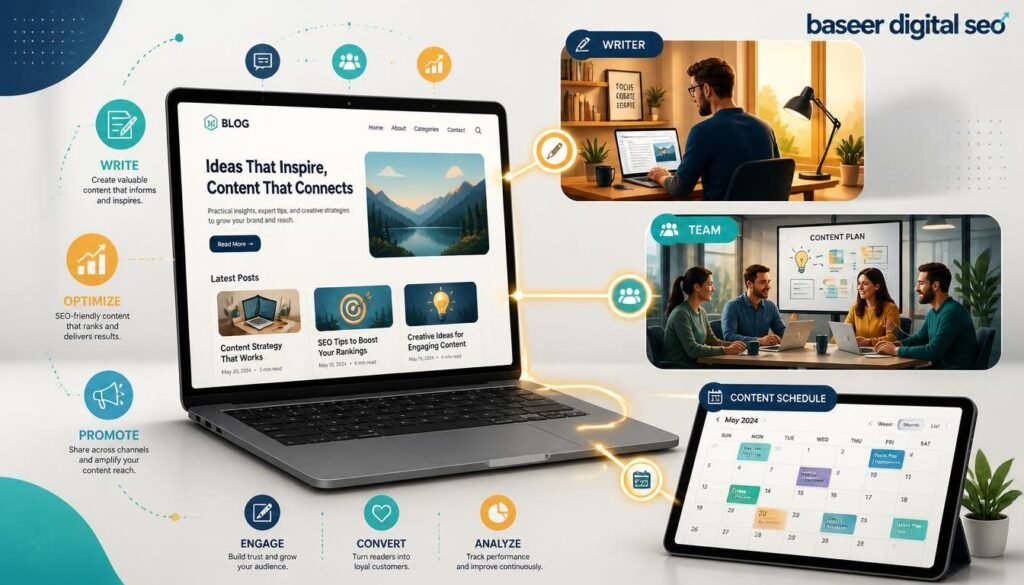
Why Should You Adopt Blogger Outreach as a Marketing Strategy?
Mostly because the payoff builds on itself. One good working relationship can bring repeat features, introductions to other writers, and mentions you never asked for.
Build Relationships with Bloggers in Your Niche
When you consistently build relationships with bloggers, you’re no longer a stranger by the time you pitch. They may remember that you shared their post last month or left a comment that actually added something, and that makes a later “yes” much easier.
Think of any professional circle. The consultant who has been helpful in an industry group for six months gets a warm reply when they ask for an introduction. The newcomer who appears once, favor in hand, usually gets a polite brush-off.
Improve Brand Awareness, Referral Traffic, and SEO
A feature on a respected niche blog puts you in front of people who already care about the topic. Some click straight through; others just remember your name and search for it later. Relevant placements can also earn high-quality backlinks from sites search engines regard as trustworthy.
Be realistic, though. No honest marketer can promise that a given link will move your rankings. Outreach helps most when your website and the pages you’re linking to are already in good shape.
The Psychology Behind a Successful Blogger Outreach Strategy
Bloggers respond when a message feels relevant to their site, respects their time, and is easy to act on. A good blogger outreach strategy is largely about meeting those three conditions.
Understand the Blogger’s Audience and Interests
Spend time on the blog before writing anything. Which posts draw comments? Which topics does the author keep returning to? A UK parenting blogger who writes about cheap days out is thinking about her readers’ budgets and weekends, so a pitch built around your feature list won’t register.
Once you understand the audience, you can suggest something that fits it, and that’s what separates a welcome pitch from an unwelcome one.
Offer Value Before Asking for a Link
You can reverse the usual order with very little effort. Comment thoughtfully on a recent post, mention a broken link you spotted, or send a data point their readers would enjoy, and raise your own request afterward.
The Goal: What Are You Trying to Achieve?
Be clear with yourself about what you want: a guest post, a mention, an interview, a review. A vague goal produces a vague email, and vague emails go unanswered.
The Benefit: What’s in It for the Other Person?
Every message has to answer the question the recipient is quietly asking, which is why they should spend time on it. Original data, a founder’s quote, a well-researched article that fills a gap on their site, a better resource for their readers: any of these can work. If you can’t name the benefit, hold the email back.
A Step-by-Step Approach to Developing a Blogger Outreach Strategy
You can reuse this process for almost any blogger outreach campaign, whatever your industry or budget.
Step 1: Set a Clear Goal
Decide what the campaign is for: more guest posting placements, traffic to a particular page, awareness around a launch. One focused goal is far easier to plan around than three competing ones.
Step 2: Define Your Success Criteria
Pick your measures before you start, such as replies, placements, referral visits, or relevant links earned. Setting them early stops you from quietly lowering the bar once results come in.
Step 3: Identify the Right Targets
List quality beats list length. Twenty well-matched blogs will usually do more for you than two hundred loosely related ones.
Find Relevant Bloggers and Publishers
Start with search. Look up topics your customers care about and see who ranks, skim “best blogs” roundups in your field, and check where competitors have been mentioned. Newsletters and professional communities often surface writers that search results miss.
Evaluate Audience Relevance and Website Quality
Not every blog deserves a pitch. Check a few things first:
- Whether the site has published recently and does so regularly
- Whether the writing is original and reasonably well edited
- Whether the audience looks like your customers
- Whether it seems like a real publication rather than a site built to sell links
- Whether readers are in your market, such as the US, UK, or Canada
If it feels thin, or exists mainly to sell placements, leave it.
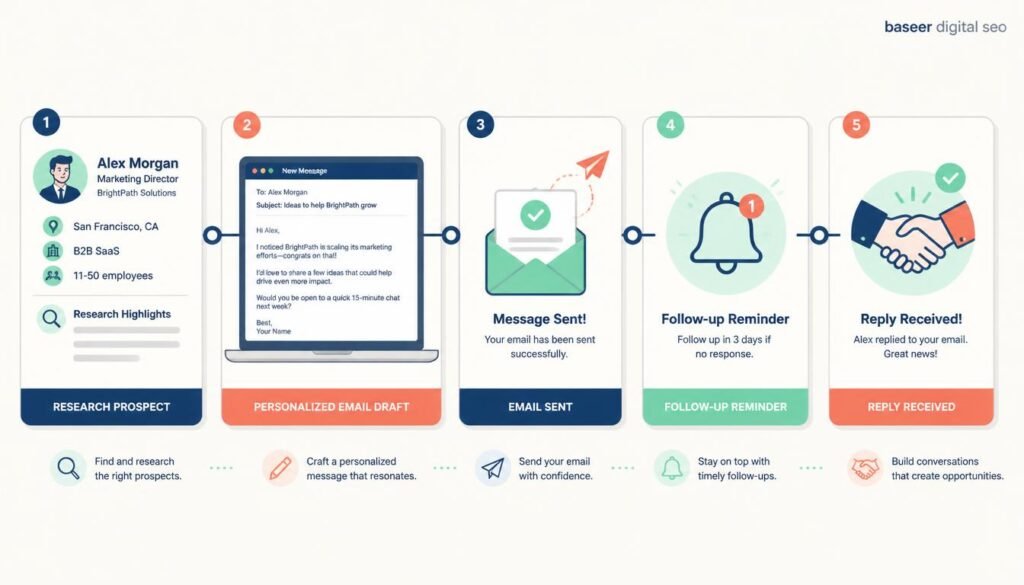
Step 4: Research Your Prospects
Read several recent posts. Note the tone, the recurring themes, and the gaps. Check whether they take guest contributions and whether they’ve worked with brands before. Good blogger prospecting is mostly careful reading.
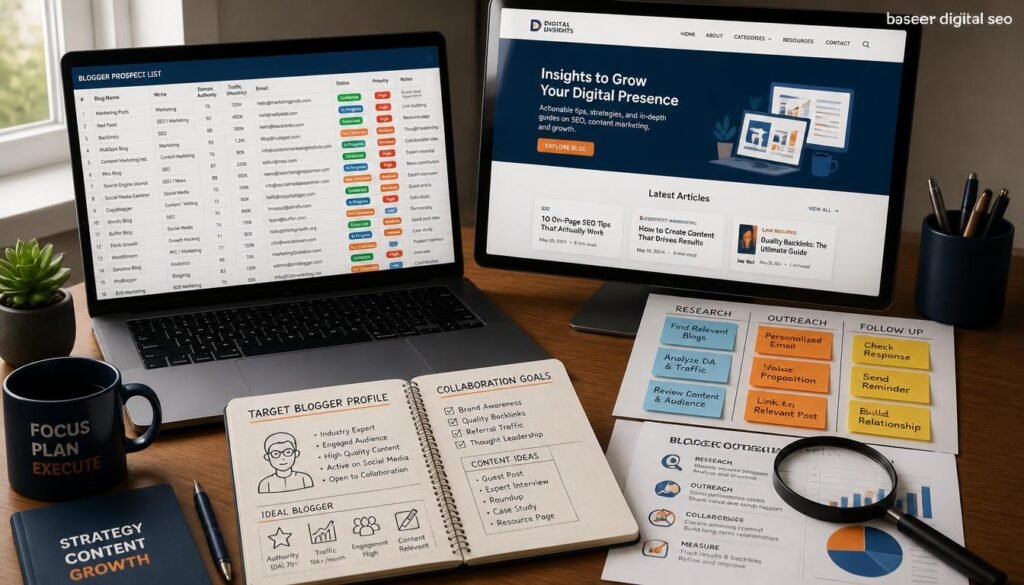
Step 5: Find the Right Contact Information
Most blogs have a contact page, a “write for us” page, or a professional social profile showing how the author prefers to be reached. If you have to track down an address another way, verify it before sending. Address a named person too, because “Dear Webmaster” gives away a mass mailing instantly.
Step 6: Personalize Your Outreach Message
Personalization isn’t a first name dropped into a template. It’s evidence that you read their work: name a specific article, say what was useful about it, and tie your idea to what their readers want.
Step 7: Develop an Attractive Value Proposition
Your value proposition is the reason they’d say yes. Original research, a fresh angle on a familiar topic, a carefully written guest article, expert commentary, an updated resource for an older post. Whatever it is, make it concrete enough that they can picture exactly what they’d receive.
Step 8: Structure Your Messaging
Clear structure makes your email easier to read and easier to answer.
Find the Core of Your Message
Try to say your pitch in one sentence. If that’s hard, you’re probably asking for too much.
Write a Clear, Personalized Subject Line
Keep it honest and specific, like “Idea for your post on remote-work tools,” rather than “Quick question” or anything hinting at a conversation that never happened. Faked familiarity tends to backfire.
Make Your Request Relevant and Concise
A short email usually works best: a personal opening, the idea, the benefit to them, and one simple next step. Busy writers reply to messages that don’t demand much.
Step 9: Follow Up Professionally
Inboxes fill up and good emails get buried, so a brief reminder after about a week often prompts the reply the first message didn’t. If you can add something useful, do. After two or three attempts, stop.
How to Write an Effective Blogger Outreach Email
A blogger outreach email has one main job, which is to earn a reply. Everything after that depends on it.
Blogger Outreach Email Best Practices
- Use the person’s name and refer to something specific they’ve written.
- Open with what they stand to gain.
- Keep it to roughly 150 words or fewer.
- Ask for one thing, not several.
- Say plainly who you are and why you’re writing.
- Proofread, since typos suggest a rushed send.
- Take a “no” graciously.
A sound email outreach strategy comes down to respecting the recipient’s time, and most of the list above follows from that.
Blogger Outreach Templates and Examples
Treat these outreach email templates as starting points. Rewrite them in your own voice and swap in real details.
Guest Posting Outreach Email
Subject: Guest post idea for your meal-planning series
Hi Sarah,
I’ve been reading your meal-planning posts for a while, and the recent one about feeding a family of four on a tight budget was really helpful, particularly the part about batch-cooking staples.
I work with a grocery-delivery service and had an idea for a guest article called “Five Ways to Cut Weekly Food Waste Without Changing How You Shop,” with practical tips and my own photos. If it sounds like a fit for your readers I’d be glad to send a short outline, and if not, that’s completely fine.
Thanks for your time,
Daniel
Good guest posting outreach looks like this: a specific idea, a short message, and a clear focus on the blogger’s readers.
Content Collaboration Outreach Email
Subject: Collaboration idea: tax tips for freelancers
Hi Priya,
Your guide to quarterly tax planning for Canadian freelancers is one of the clearest I’ve come across. Our accounting software team recently surveyed freelancers about the tax problems they find hardest to deal with, and I think the results might suit your audience.
Would you be interested in putting together a short article or infographic using that data? I’d take care of the design and give you the full results to use however you like.
Best,
Megan
Resource Recommendation Outreach Email
Subject: A newer resource for your home energy savings post
Hi Tom,
I read your article on cutting winter heating bills in UK homes and found it very practical. While reading, I noticed one of the links in the insulation grants section now leads to an outdated page.
We recently published an updated guide covering the current schemes, which you may want to use as a replacement if it looks useful. Either way, thanks for a helpful article.
Kind regards,
Emma
This is link building outreach in its gentlest form: you’re helping the blogger before asking anything of them.
Blogger Outreach Tools and Prospecting Techniques
You don’t need a large software stack, but a few well-chosen blogger outreach tools save time and prevent avoidable mistakes.
How to Find Bloggers for Outreach
When you want to find bloggers for outreach, there are several routes worth trying:
- Search your main topic keywords and study who appears on the first two pages
- Look at which blogs link to your competitors
- Browse industry newsletters and roundup posts
- Check professional communities and social platforms for active writers
- See who contributes to publications your customers already read
Blogger Prospecting and Contact Research
SEO platforms such as Ahrefs, Semrush, and Moz show a site’s authority and who links to it, while email finders and verification tools help you locate and check addresses. They support your judgment but don’t replace it, since a high authority score says nothing about whether a blog suits your topic.
Organize and Track Your Outreach Campaign
A spreadsheet is usually enough for a small push. Larger teams often move to a CRM or a dedicated outreach platform for templates, scheduling, and reply tracking. Whichever you choose, record each prospect’s status, the date of last contact, the next step, and a few notes on what they care about.
If you’re considering blogger outreach services from an agency, ask how they choose targets, whether a real person personalizes each message, and how they report results. Vague answers are a useful warning sign.
Common Blogger Outreach Mistakes to Avoid
Most unsuccessful campaigns fail for a handful of familiar reasons.
Sending Generic Mass Emails
One pitch sent to hundreds of strangers usually earns silence or a spam flag, and bloggers can spot a template within seconds. If you use templates, treat them as a skeleton and adjust every message to its recipient.
Focusing Only on Backlinks
When a link is all you care about, the recipient can usually tell. Bloggers prefer people who show some interest in their readers. Links earned through a good collaboration are a natural by-product, whereas leading with the link makes the exchange feel transactional.
Ignoring Follow-Ups and Relationship Building
Many promising contacts fade because nobody followed up, or because communication stopped the day a post went live. Thank the blogger publicly, share their work, and check in now and then with something useful. The relationship is the more valuable asset.
How to Measure Blogger Outreach Campaign Results
Go back to the success criteria from Step 2. They show what’s worth repeating and what to drop.
Audience Engagement and Referral Traffic
Look at how many visitors each placement sends, how long they stay, and whether they sign up or buy. Referral reports in Google Analytics show which blogs send engaged readers, and a small site with a loyal audience can easily outperform a much bigger one.
SEO Performance and High-Quality Backlinks
Judge the links you earn by relevance and the quality of the sites they come from, not by raw numbers. Google Search Console can show whether target pages gain impressions and rankings over time, though effects can take weeks or months to appear, and links are only one factor among many.

Conclusion: Build Long-Term Relationships Through Blogger Outreach
Blogger outreach rewards patience and genuine interest in the people you write to. The brands that do well with it aren’t usually the ones sending the most emails. They’re the ones whose messages a busy writer actually wants to open.
If you’re starting out, pick five or ten well-matched blogs, write each message with care, follow up politely, and treat every reply, even a decline, as the start of something longer. In my experience those connections end up doing more for your visibility than any single link.
Frequently Asked Questions
What Is Blogger Outreach?
It’s the process of contacting bloggers and independent publishers to collaborate through guest posts, resource mentions, interviews, or content partnerships, so that both sides benefit.
How Do You Do Blogger Outreach?
Set a goal, find relevant blogs, research each writer, and build your pitch around a specific benefit to them. Then send a short email, follow up politely, and track results. For anyone asking how to do blogger outreach well, relevance and relationships matter more than volume.
How Do You Write a Blogger Outreach Email?
Begin with a genuine reference to something they’ve published, explain what you’re offering and why it suits their readers, and make one clear request. Keep it brief and honest, and avoid misleading subject lines.
Is Blogger Outreach Useful for SEO?
It can be. Blogger outreach for SEO helps you earn relevant mentions and quality links, along with referral traffic and brand visibility. It doesn’t guarantee rankings, and it works best alongside strong content and a healthy website.
How Often Should You Follow Up with Bloggers?
Wait five to seven days after the first email, then send one or two short follow-ups about a week apart. If there’s still no response, move on and reconnect later when you have something new to share.



Leave a Reply